Come April 22nd and it would be four decades since Earth day took genesis in the United States. Since then it has gone international through the Earth Day network comprising of NGOs, quasi-governmental agencies, local governments, activists and nature lovers.
[Read more…] about Everyday is Earth Day
Archives for March 2011
Fight Wildlife Poaching in Sumatra – Time to vote for Trevor Frost
All human actions have one or more of these seven causes: chance, nature, compulsions, habit, reason, passion, desire.
Aristotle
Brew all of them together, add an insatiable urge to make a real difference to wildlife conservation and you have a noble cause – Helping park rangers protect endangered species from poaching in Sumatra, Indonesia. A cause that needs concerted support,a cause that creates a chance to help wildlife rangers get proper support, a cause that catalysts small efforts to give back to Mother nature, a cause that stoops to conquer in making desire, reason and passion a compulsion to make positive change happen.
[Read more…] about Fight Wildlife Poaching in Sumatra – Time to vote for Trevor Frost
Asian Green City Index – How Indian cities fared
The Asian Green City Index report, a unique research on environmental sustainability of 22 major cities in Asia, conducted by the Economic Intelligence Unit and commissioned by Siemens has lots of food for thought for the Indian cities that went under the hammer. Eight parameters formed the crux of the study framework namely energy and CO2, land use and buildings, transport, waste, water, sanitation, air quality and environmental governance. The overall verdict for the Indian cities – Mumbai, Calcutta and Bengaluru fared badly ranked “below average” when it comes to environmental and climate protection, the saving grace if you can term it thus credited to Delhi finding mention as an “average performer”. The Greenest Metropolis tag went to Singapore, a testimony to its focus on environmental sustainability.
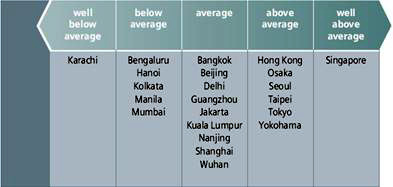
Some interesting insights from the Green report vis a vis the Indian metros of which Chennai was not included in the scope of study.
Mumbai is the densest city
Mumbai might be the land of opportunities, the maximum city to a whole lot of people , but the suffocating truth is that it is the densest city in the green index,a crushing 27000 people/square kilometers.
Bengaluru scores high on low CO2 emissions
Bengaluru can give itself a pat on its back, boasting of some of the lowest levels of CO2 emissions per capita, all thanks to most of its energy needs being generated from renewable sources, some solace considering the city is more in the news now for garbage disposal woes.
Kolkata, low on water consumption
At 138 litres per day per person,Kolkata is characterized by relatively low water consumption, quite low even among the the 22 cities. Is water scarcity a contributing factor?
Delhi, low per capita waste generation
Surprisingly Delhi has an extraordinary low per capita waste generation figure of 147kg per year, perhaps results of concerted efforts towards ensuring the green way of life.
Jan Friederich, research head of the EIU study has the last word.
Cities that performed well in the Index are characterized by their ability to successfully implement environmental projects and consistently enforce regulations.
The encouraging note is environmental awareness and climate protection guidelines are playing an increasingly important role.
For the comprehensive report, which makes for some riveting reading, cycle over here.
Union Budget India 2011-12 – What’s in store for the environment?
The Union Budget for 2011-12, announced by India’s Union Finance Minister, Mr Pranab Mukherjee, in Parliament on February 28, 2011 does seem to take a hard look at environmental concerns with some concrete plans on the anvil. Down below are the salient features.
- 4% increase in the budget allocation for the ministry of environments and forests compared to last year, i.e. from Rs.220 million to Rs.230 million.
- Drop in funding in the segment of Forestry and Wildlife protection, which is from Rupees 7.93 billion in 2010-11 to Rupees 7.85 billion this year.
- Increase in allotment for the conservation of ecology and environment which is changed from Rupees 12.2 billion in 2010-2011 to Rupees 13.5 billion for the current year.
- Over Rs.600 crore allocated for protection and regeneration of forests, environmental management and cleaning of rivers and lakes.
- Rs 200 crore allocation for 2011 from the National Clean Energy Fund to start implememention of the ambitious 10 Years Green India Mission (GIM) program
- Rs 200 crore from the National Clean Energy Fund for environmental remediation program, cleaning up of the Ganges and other important rivers.