We can’t say for sure. So far, it was ‘may not be true’. But with time and scientific reports, we are tilting towards a positive connection between global warming and swine flu. Here is why.
To begin our case with media reports, skeptics are crying hoarse that there cannot be a link between Global Warming and Swine Flu. They are two separate things that have no consequence on each other – akin to comparison between apples and oranges. Climate change has nothing to do with H1N1 virus and its mutations. This is more of media hype with not much scientific backing. Global warming skeptics are supposedly having their last laugh.
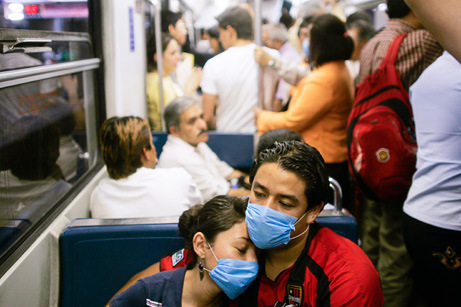
There have been no confirmed reports or announcements that suggest that global warming could have triggered swine flu. But the environmentalists, the public health community and the experts are not buying this. Having seen deluge of diseases such as deadly disease such as malaria, dengue fever, SARS and more in the recent past, the scientific community is not ruling out the possibility of global warming being one of the hidden drivers for swine flu.
Global warming causes climatic changes wherein the environment becomes warmer or wet. This helps in the proliferation of certain plant and animal species which could be host to multitude of bacteria and viruses. Global warming has already been a catalyst to infections disease that needed a host or vector, to proliferate. We will not be surprised if swine flu links to global warming phenomena.
While the focus of the medical community is to get vaccines for H1N1 virus out in the market, scientific community is looking at the root causes to figure out the prevention routes.
With more information pouring in, swine flu is being attributed to the living conditions of the live stock. The level of hygiene, its living conditions, cramped quarters, and its environment is coming under scrutiny to establish a firm evidence of origin of swine flu.
Here is an excellent article from Down To Earth which explore the most possible reasons behind the occurrence of swine flu – while taking into account the poor sanitary and hygiene condition of the livestock at Smithfield Farms.
It is a known fact that swine flu did not happen overnight. Sustained exposure of livestock to industrial wastes, toxins, bad air, bad water, etc could have caused the livestock to fall sick most of the time. And treating their repeatedly sick pigs with antibiotics could have caused the gene strains get more and more resilient with time. This strain has now crossed its animal barriers and reached humans. To top this we cannot deny the possibility of changing temperature to be one of the reasons for these mutations to occur – by providing it with a favorable environment.
“Swine flu and climate change are inextricably related” says Angela Mawle, CEO of the UK Public Health Association, who explores and warns us of the catastrophic impacts of climate change and unsustainable development on human health.
Thankfully, Angela is not the sole champion linking swine flu to climate changes. Steven Sanderson of the Wildlife Conservation Society talks of the deadly dozen diseases that will spread because of climate changes, and says – “ the term ‘climate change’ conjures images of melting ice caps and rising sea levels that threaten coastal cities and nations, but just as important is how increasing temperatures and fluctuating precipitation levels will change the distribution of dangerous pathogens.”
We still need more confirmed reports and announcements to link these two phenomena together. While we wait and watch these developments, we can never forget the fact that we have caused nature to react in this way.
If it is the survival of the fittest, time will tell if these strains, which are getting stronger by the day, or humans will eventually survive.