There is a saying that goes like this – Never fear shadows since it just means there is light shining nearby. Well, for those who live literally in the shadow of incandescent (standard) bulbs here are a few bright facts that will throw some light on making a switch to compact fluorescent bulbs. It will simply change the way you live..
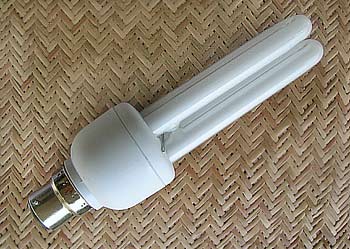
Quick Facts on Compact Fluorescent bulbs
- Uses two thirds less energy than standard incandescent bulbs
- Life span more than ten times longer than standard bulbs (6,000 and 15,000 hours compared to 750 hours or 1000 hours for incandescent bulbs)
- Substantial savings in energy costs
- Produce seventy five percent less heat
- Save 2000 times their own weight in greenhouse gases
- Most CFL’S fit into existing incandescent light fixtures
- Use of electronic ballasts in CFL reduces flickering and slow starting
Recycle CFL bulbs after use
It a no-brainer that use of CFL lights is the way to go not only for the environmentally conscious but also the average citizen if you take into account the money and energy savings. At the same time, CFL operate with an elemental form of mercury that can be a risk when broken. Its important to ensure that they recycled after they are spent. If you cant recycle them, atleast seal them in a freezer bag before safely disposing them. This EPA resource shows how to safely dispose CFL remnants if they are broken.
The initial cost of a CFL may be 10 times that of a standard bulb. But the savings in energy and the life being almost 9-10 times that of a standard bulb means that life cycle cost of a CFL is lower.
And once the purchase of CFLs increase the price also would come down due to bulk production volumes
How do you recycle CFLs? Might be a d’uh question…but just can’t figure out what you mean by recycling CFLS. I have only CFLs at home…hence the question please.
Very pertinent actually. Opens the Pandora’s box and should necessitate a post by itself.
CFL recycling is usually done by waste collection agencies, CFL manufacturers and retailers.
Unfortunately though in India, there is lack of regulations/enforcement systems vis-a-vis manufacture, disposal and recycling. The lack of inertia among manufacturers to take responsibility for disposal and recycling needs to be addressed. I had read in the past about BSES launching kiosks for safe disposal of CFLs. Not sure about Chennai or elsewhere in India though. It is important that manufacturers take the lead on this front and the monitoring agencies keep up the pressure.